
By JaDarius Duncan
FORT BLISS, Texas — Air defense soldiers may be called to deploy anywhere in the world with little warning. For Capt. Cole Davis, preparing his soldiers for that possibility requires training that exposes them to the pressure, uncertainty and coordination of an actual deployment.
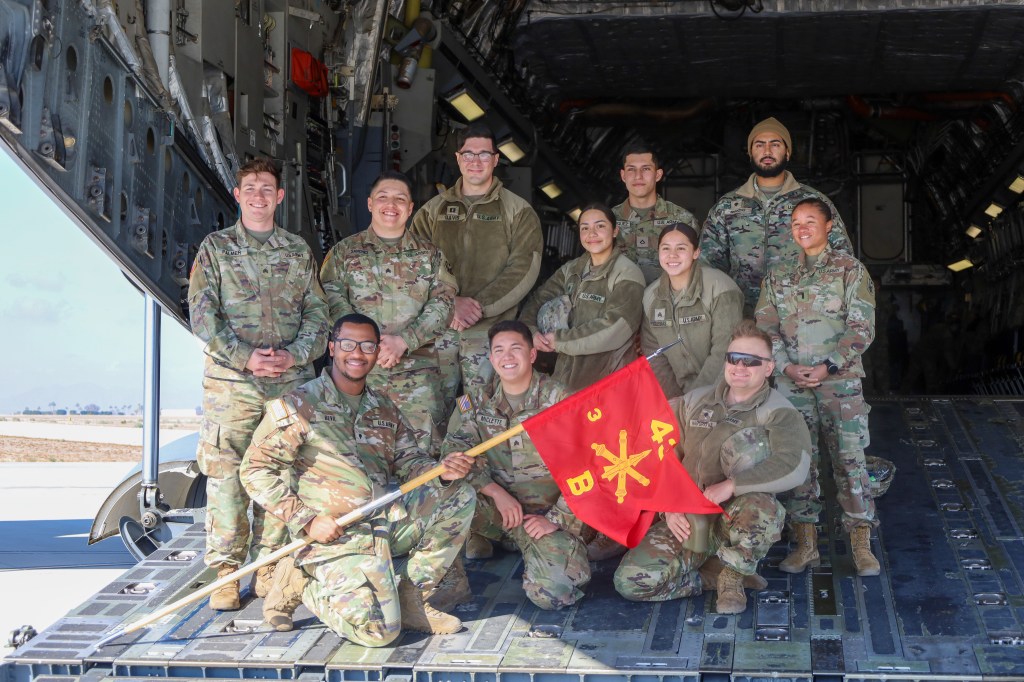
Davis, then commander of Bravo Battery, 3rd Battalion, 43rd Air Defense Artillery Regiment, led his soldiers through a joint air-load training exercise at Fort Bliss.
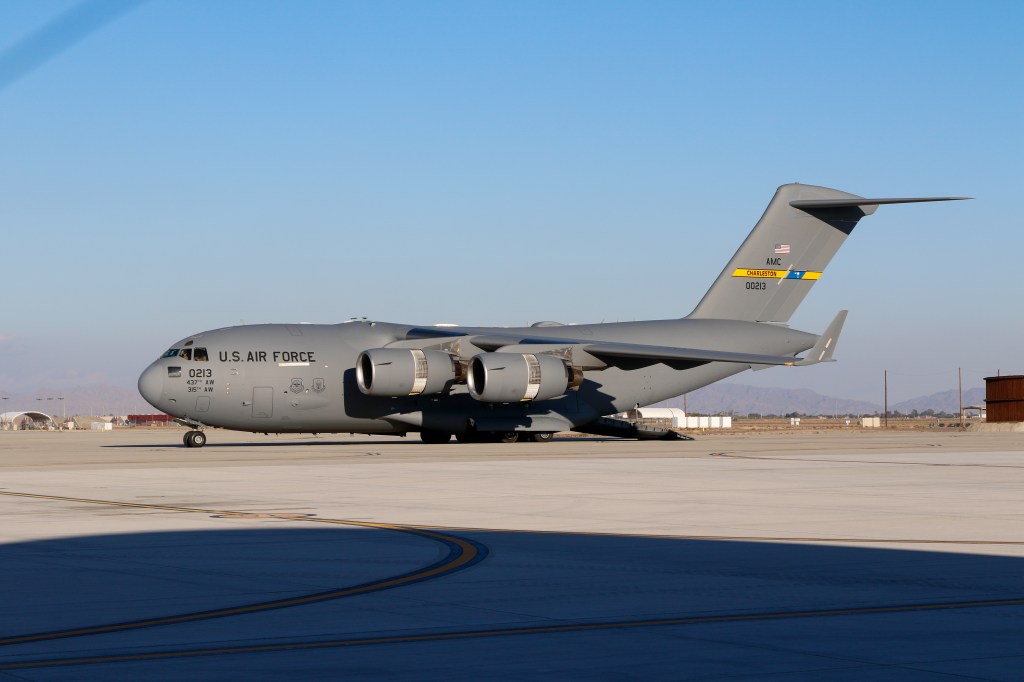
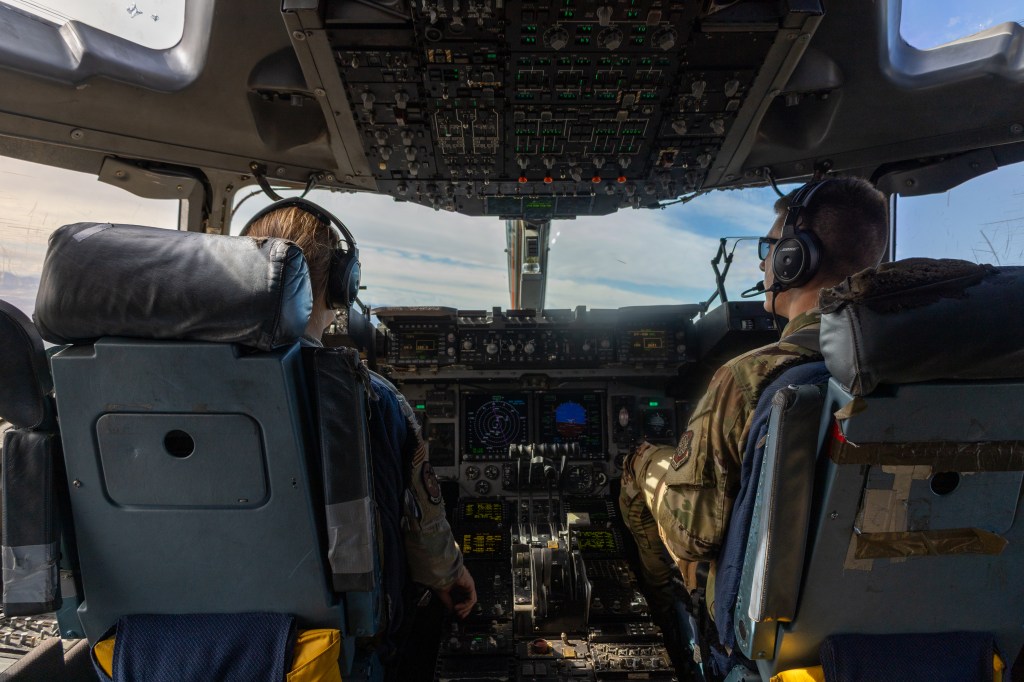
The exercise brought Bravo Battery together with the U.S. Air Force’s 14th Airlift Squadron. The squadron operates the C-17A Globemaster III and provides aircrews capable of transporting personnel and equipment during global military operations.
During the training, Bravo Battery prepared its soldiers and equipment for air movement from Fort Bliss. The unit loaded aboard the aircraft before flying to Marine Corps Air Station Yuma in Arizona, near the U.S.–Mexico border. The movement tested the battery’s ability to coordinate with another military service, operate under time constraints and continue its mission after arriving at a different installation.
“I think it’s really important to do things like this,” Davis said, explaining that air defense units may be sent anywhere in the world on short notice.
As battery commander, Davis was responsible for ensuring his soldiers could perform more than the technical duties associated with air and missile defense. They also needed to understand how to prepare equipment, meet aircraft requirements and respond when a mission did not go exactly as planned.
Those skills are especially important for units assigned to the 11th Air Defense Artillery Brigade, an organization at Fort Bliss that describes itself as the world’s largest and most deployed air defense organization.
Command Sgt. Maj. Albert Fletcher III, who served as the brigade’s senior enlisted leader, reinforced the importance of preparing air defense soldiers for rapid worldwide missions.
“Air defense forces must be prepared to deploy on short notice and integrate with joint partners,” Fletcher said. “Training like this builds confidence in our soldiers and confirms that the unit can move its personnel and equipment wherever the mission requires.”
For Davis, the difficulties experienced during the exercise were not failures. They were part of what made the training valuable. He said the stress and tribulations his team experienced were “the closest thing to the real thing in a deployment.”
The flight to MCAS Yuma gave the soldiers an opportunity to experience the friction of deployment without leaving the controlled environment of a training mission. Every stage—from preparing equipment at Fort Bliss to coordinating the flight and operating after arrival—required communication, teamwork and attention to detail.
The exercise also demonstrated the importance of cooperation among the Army, Air Force and Marine Corps. Air defense units protect personnel and critical assets from aerial and missile threats, but they often depend on joint partners to move their personnel and equipment quickly.
By placing his soldiers in an unfamiliar and demanding situation, Davis gave them an opportunity to identify weaknesses before an actual deployment. The experience reflected his approach to leadership: realistic pressure, careful preparation and trust in his team.
 jadariusduncan.blog
Leave a comment